What is safeguarding?
Safeguarding means creating a safe and welcoming environment where everyone is treated with respect. It’s about running your organisation in a way that prevents harm, bullying, harassment, abuse and neglect, and knowing how to respond if something goes wrong. Everyone has a role in safeguarding, and it should be part of everyday work. All charities have a duty to keep volunteers, staff, participants and donors safe.
How does safeguarding apply to your volunteer recruitment and vetting?
Safeguarding starts with how you recruit and check volunteers. Taking time to properly vet people before they start helps spot any potential risks early and makes volunteering safer for everyone.
Vetting can include:
- application forms
- interviews
- references
- background checks, such as DBS checks (read more...)
The type of checks you need will depend on the volunteer role, so it’s important to carry out a simple risk assessment first. This means looking at what the volunteer will be doing and thinking about any possible safeguarding concerns.
For example, does the role involve:
- working with children or vulnerable adults?
- being alone with participants?
- handling money or personal information?
Once you understand the risks, you can decide what safeguards are needed. This might include interviews, references, training, supervision, or DBS checks. The aim is to make sure volunteers are suitable for the role and that everyone stays safe.
What do your volunteers need to know about safeguarding?
Volunteers need to understand that safeguarding is everyone’s responsibility. They should know how to help keep the people they support safe, recognise possible signs of harm or abuse, and feel confident about what to do if they have concerns.
This includes:
At Volunteer Centre Sutton, part of our volunteering training includes 2 short videos, one on safeguarding awareness for adults at risk and one on safeguarding awareness for children and young people.
Watch Adult Safeguarding Video
Watch Children's Safeguarding Video
Other ideas to consider:
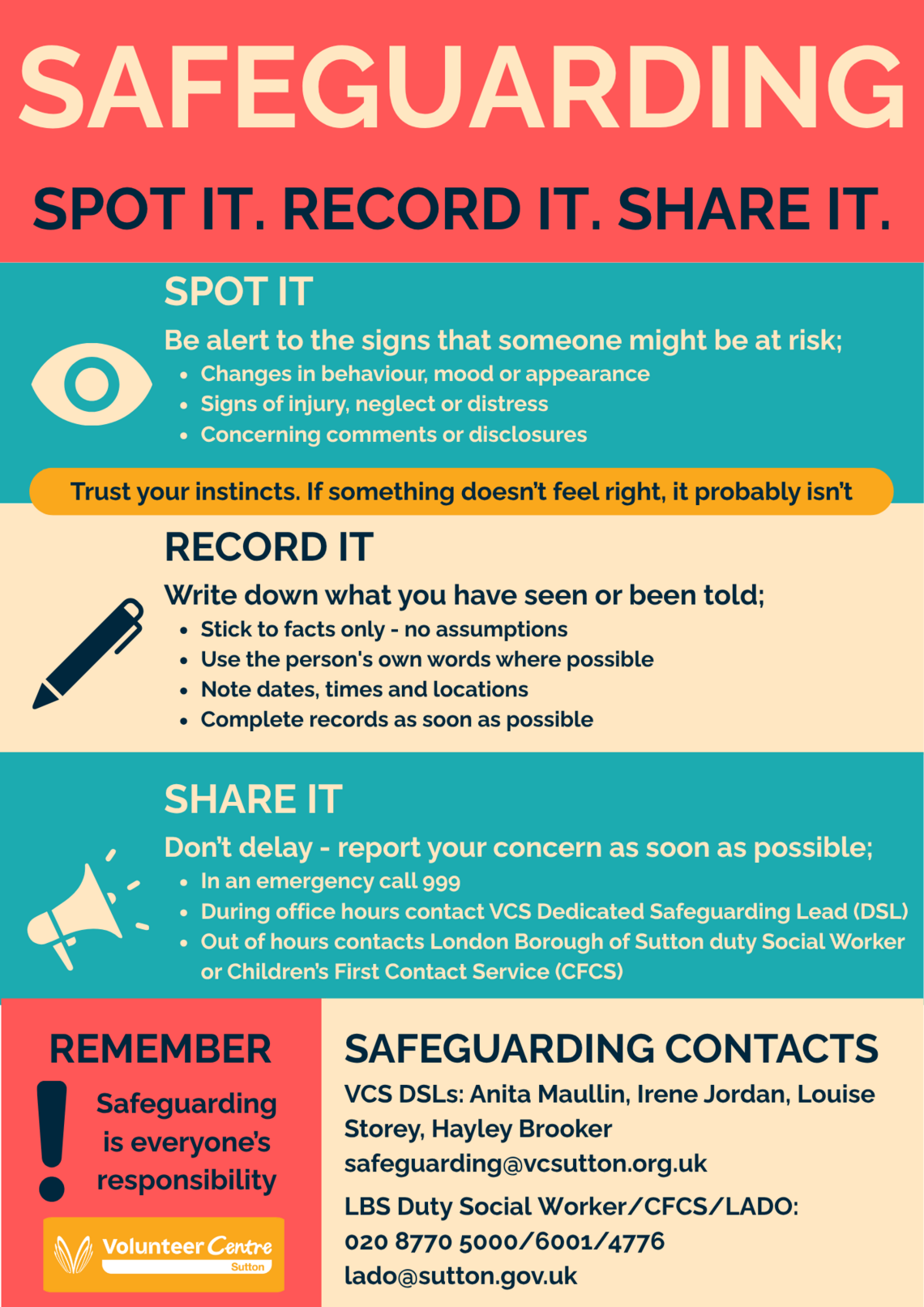
- Safeguarding Information about how to report concerns displayed on posters in your setting (see example below) - download a PDF
- Refresher "quiz" on safeguarding - example here
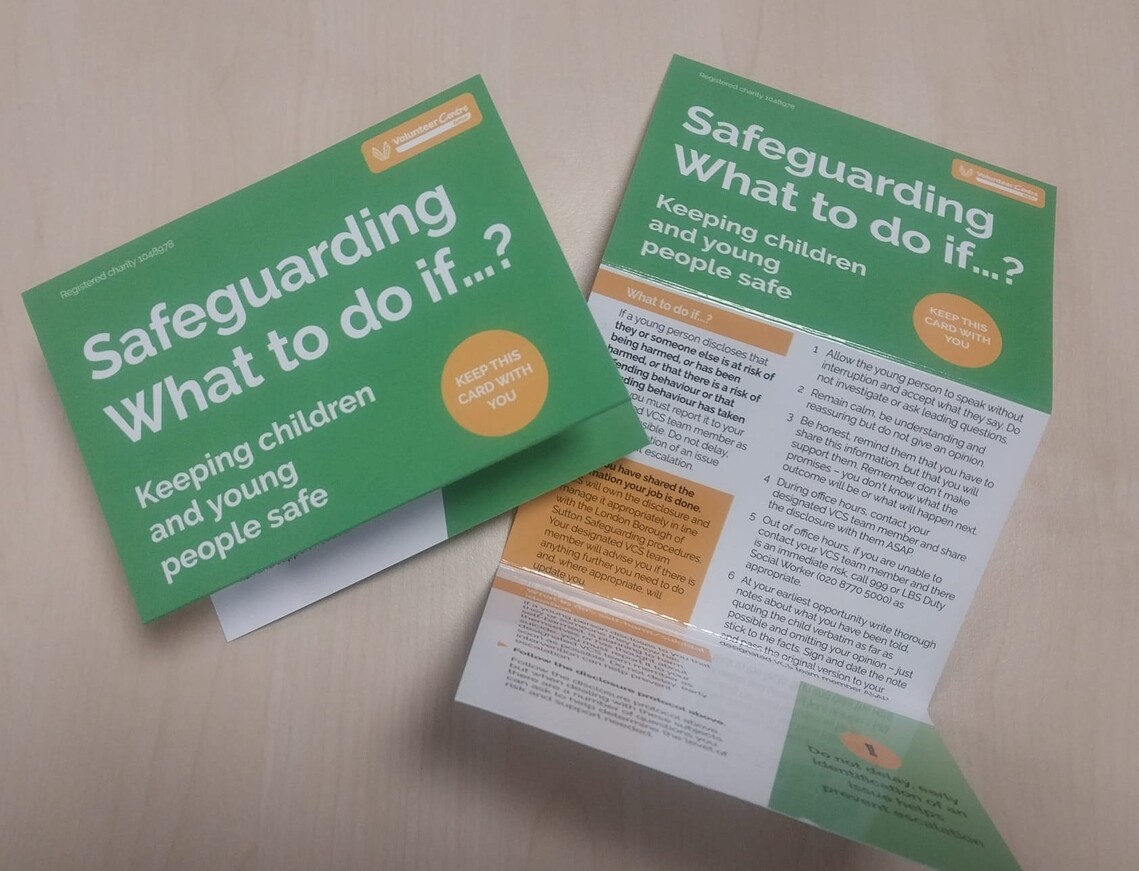
- Giving your volunteers a wallet sized card with safeguarding information that they can keep on them and easily refer to (example below)